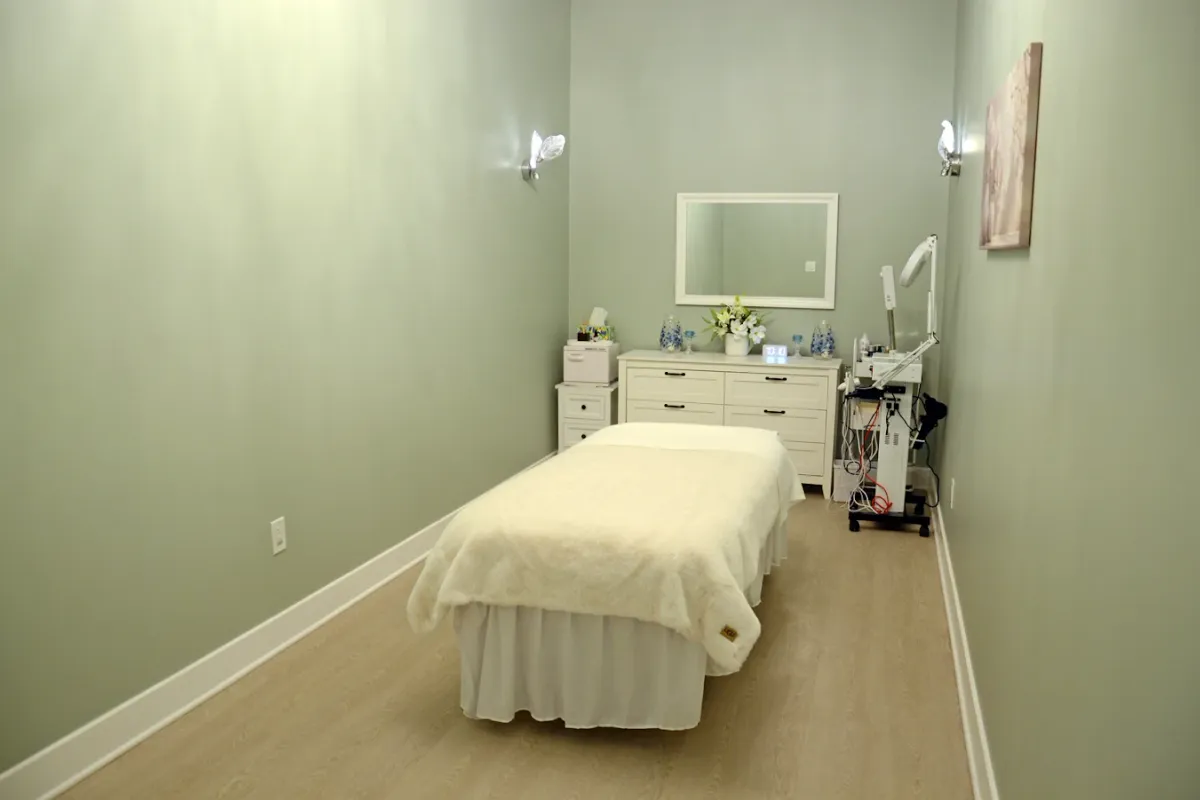
There is a specific week every year — usually somewhere in the second half of November — when the furnace has been running long enough that everyone's face gets tight around the cheekbones at the same time. That is the week our hydrating bookings double.
It is not a coincidence and it is not marketing. Cold outdoor air holds very little moisture, indoor heating strips out what is left, and the skin barrier loses water faster than it can replace it. Livonia gets roughly five months of that.
A Hydration-Focused Spa Experience
The treatment we book for this is the Deep Cleanse & Hydra Facial, 90 minutes for $108. It is described on our menu as adaptable for dry and very dry skin, and when hydration is the goal, that is how we run it: a gentler cleanse, restrained exfoliation, and the bulk of the treatment time spent on hydrating layers and a mask that stays on long enough to matter.
Ninety minutes is doing real work here rather than padding the price. Hydration steps take time to absorb properly. A rushed hour cannot deliver the same result on dehydrated skin, which is why we point people at the 90-minute treatment rather than the Classic when dryness is the specific complaint.
Dry Skin vs. Dehydrated Skin
Worth knowing the difference, because it changes what helps. Dry skin lacks oil — it feels rough, flaky, and it is usually a lifelong skin type. Dehydrated skin lacks water — it feels tight, looks dull, fine lines look more obvious, and it is a temporary condition that anyone can get, including people with oily skin.
Winter in Michigan produces a lot of the second kind. Oily skin that suddenly feels tight in January is dehydrated, not dry, and the fix is water and barrier support rather than heavier oil.
What the Skincare Guidance Actually Says
Dermatology guidance on dry skin is unglamorous and consistent: moisturisers help skin retain water in its outer layers, they work best applied while the skin is still slightly damp, and gentle cleansing matters more than any single active ingredient. The American Academy of Dermatology recommends regular moisturising as the foundation of managing dryness.
A hydrating facial complements that routine. It does not replace it. Ninety minutes with us in December will not carry you to March on its own — but it will reset skin that has got ahead of you, and give you a clear read on what your routine at home is missing.
Maintaining Hydration After Your Facial
- Moisturise within a minute or two of washing, while skin is still damp — this single habit change does more than switching products.
- Turn the shower temperature down. Hot water feels good in January and strips the barrier faster than anything else in your routine.
- Run a humidifier in the bedroom. Overnight is when heated indoor air does most of its damage.
- Ease off acids and retinoids when skin is already tight — this is the most common winter mistake we see.
- Keep using sun protection. Winter sun off snow still reaches your face.
Hydration bookings
-
Deep Cleanse & Hydra Facial
90 minutes $108 -
Classic Facial
75 minutes $80 -
First Time Facial
60 minutes $75
Why Winter Skin Behaves Differently in Michigan
Cold air holds very little water. When that air is pulled indoors and heated to 70°F, its relative humidity collapses, and the driest thing in the room becomes your skin. Every hour you spend inside from November to March, a small amount of water is leaving your face — and unlike in July, nothing outside is putting it back.
That is why a routine that worked perfectly in August suddenly is not enough by December, and why people assume their skin has changed when what changed is the air around it. A hydration-focused facial resets the barrier; the habits below keep it there.
Booking Through the Winter
Most guests who book for dryness settle into a facial every four to six weeks from late autumn through early spring, then drop back once the heating goes off. That is a sensible pattern and we would rather tell you it than sell you a package you do not need in July.
One boundary worth stating plainly: this is cosmetic skincare for dry, tight, dull-looking skin. Eczema, psoriasis, and persistent dermatitis are medical conditions and belong with a dermatologist. We are glad to work around what they recommend — just tell us before we start.